
Estimated reading time: 8 minutes
Key Takeaways
- ‘Noisy offices intolerance’ has exploded as employees return to buzzing open-plan workplaces.
- 52 % of employees rank office noise as their top frustration; 42 % would quit if the volume stays the same.
- Everyday office noise steals concentration, spikes stress hormones and quietly drains company profits.
- Post-pandemic sensory recalibration makes 60–70 dB offices feel twice as loud after 35–40 dB home setups.
- A four-level toolkit: design tweaks, personal tactics, cultural resets and strategic moves.
Table of contents
Noisy Offices Intolerance, Why the Volume Feels Louder Than Ever
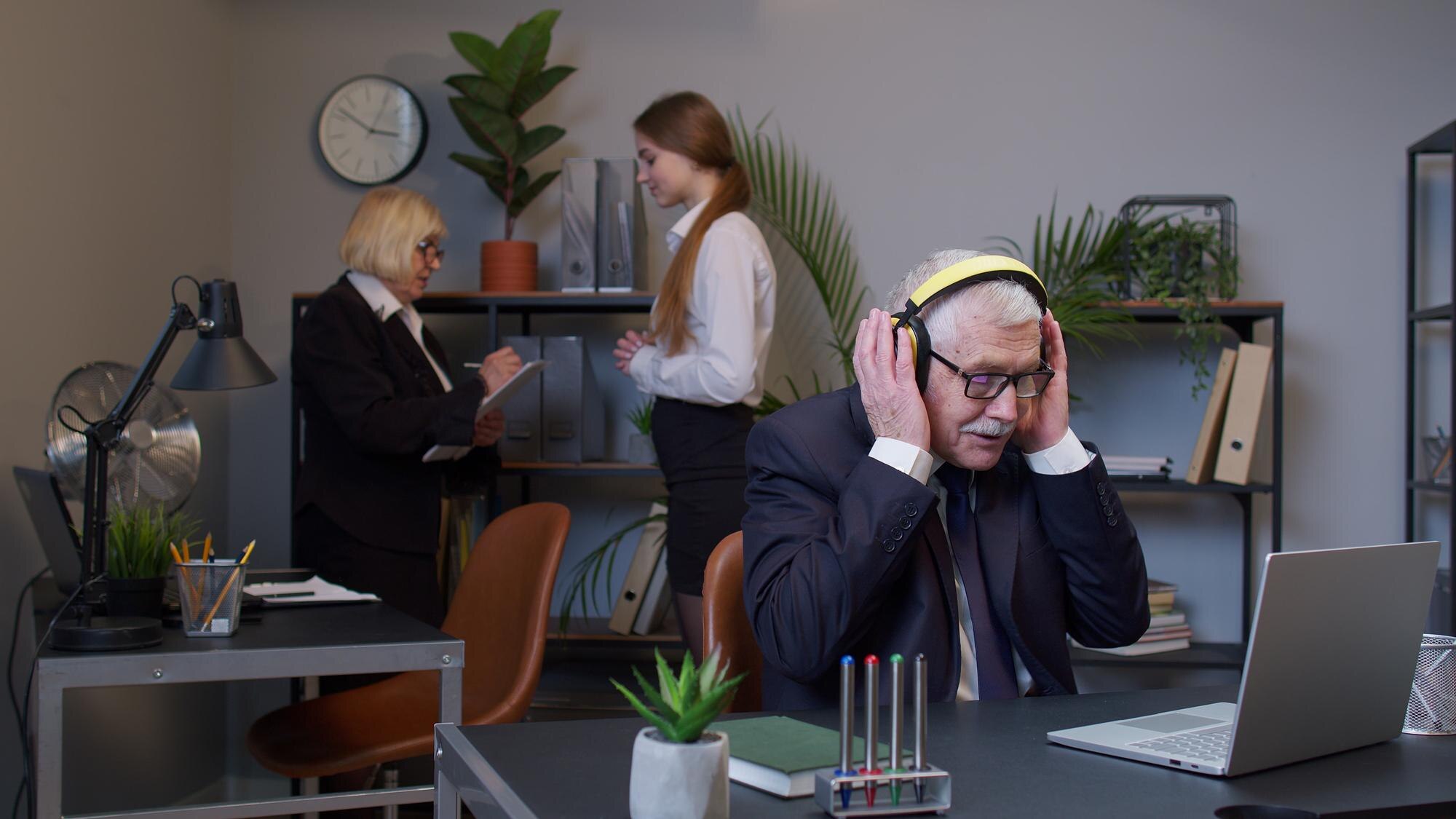
After two quiet years at home, thousands of Britons have marched back into buzzing open-plan workplaces, and ‘noisy offices intolerance’ has exploded. HR Magazine reports that 52 % of employees now rank office noise as their top frustration and 42 % say they would quit if the volume stays the same. Sarah, a project manager in Leeds, describes walking through the door of her revived open space and being wall-hit by chatter, clacking keyboards and a clunky HVAC drone. Within minutes her focus vanished.
Many readers will recognise that scene. Ordinary background sound, once tolerable, now grabs the brain by the collar. This article explains how everyday office noise steals concentration, spikes stress hormones and quietly drains company profits. It also offers a four-level toolkit, design tweaks, personal tactics, cultural resets and strategic moves, ready to turn a distracting floor into a productive, healthier space. Time to lower the volume and raise performance.
FAST FACTS, Why Tolerance Is Evaporating (office noise pollution)
Current evidence paints a stark picture:
- 56-65 % of UK staff describe their workspace as ‘too noisy’.
- 81 % say distracting office sounds now dent accuracy.
- 65 % admit tasks take longer since returning onsite.
Main culprits of distracting office sounds:
- Open-plan chatter and spontaneous corridor meetings.
- HVAC hum, printer clunks and fridge compressors.
- Constant video-call voices that bounce off glass walls.
Office noise pollution is everywhere, while ears freshly calibrated to home quiet are far less forgiving. Poor acoustics, paired with more microphones, headsets and hybrid call traffic, create a perfect storm of intolerance.
DEFINITIONS & TYPES OF SENSITIVITY (noise intolerance)
A noisy office means an average background sound above 55 dB, the level of an old kettle. Office noise pollution occurs when peaks rise 10 dB or more above that baseline, jolting attention.
Not all sensitivity is equal:
- Noise intolerance, umbrella term for reduced tolerance to ordinary sound.
- Hyperacusis, the brain exaggerates loudness; 6 % of adults feel actual pain around 70 dB, a typical photocopier.
- Misophonia, specific trigger sounds (pen clicking, chewing) cause anger or anxiety; affects up to 15 % of workers.
Together, these forms of sound sensitivity turn a standard open space into a daily minefield. Colleagues with misophonia may dread lunchtime. Those with hyperacusis cannot sit near printers without headaches. Recognising these conditions helps managers design truly inclusive, noise-sensitive offices.
POST-PANDEMIC RESET & STAT TRENDS (workplace noise sensitivity)
During lockdown most home workspaces averaged a calm 35-40 dB, roughly a quiet library. Returning to offices that run 60-70 dB instantly feels twice as loud; scientists call this sensory recalibration. Gen Z and Millennials are spearheading the push-back. In PwC’s 2023 Wellbeing Report, silence outranked free coffee in desired benefits.
Quick stat box:
- 81 % say noise now affects accuracy.
- Two-thirds report slower task completion.
- Nearly half experience daily fatigue linked to noise.
THE SCIENCE, How Noise Hits Body & Brain (loud office environment)
When the ear detects an unwanted 70 dB burst, it sends an urgent signal to the amygdala, the brain’s alarm centre. That lights up the hypothalamic-pituitary-adrenal (HPA) axis and floods the bloodstream with cortisol. Imperial College London measured an average 0.5 µg/dL cortisol spike after only ten minutes of office noise at 70 dB.
Cognitive research is equally stark: a single interruption can slash knowledge-worker productivity by two-thirds. Over a day, fatigue builds, elevating heart rate and lifting burnout risk by 23 %. For colleagues with misophonia triggers, the domino effect is amplified, anger responses fire, further disrupting concentration for everyone nearby.
WHY OPEN-PLAN MAKES IT WORSE (open office noise)
The 1960s Bürolandschaft ideal promised collaboration; today it often delivers chaos. Hard plasterboard, polished concrete and glass reflect up to 97 % of mid-frequency sound. High ceilings extend reverberation times beyond one second; guidelines suggest 0.6 s. Speech privacy index scores in open spaces slump below 0.30, solidly inside the ‘poor’ zone. Every whispered update becomes a broadcast and every laugh echoes like a town-hall meeting. Until surfaces absorb rather than bounce energy, the open office noise problem persists.
THE BUSINESS COSTS OF IGNORING NOISE (workplace noise sensitivity)
Productivity: Oxford Economics finds the typical employee loses 86 minutes each day to noise. In a team of 100 consultants billing £40 an hour, that equals £3.1 million of lost output every year.
HR: 42 % prepared to leave a loud office environment means expensive churn. Replacing one professional costs 30-50 % of salary, not counting lost knowledge.
Employer brand: Glassdoor mentions containing ‘noisy office’ have jumped 128 % since 2019, eroding recruitment pipelines.
Noisy workspace intolerance is not a minor comfort issue; it drags profits, morale and reputation.
SOLUTION MATRIX, Four-Level Approach
8a. Environmental & Design Fixes (office acoustics problems)
[Image: infographic showing ceiling tiles, carpet tiles, quiet pod]
- Fit Class A acoustic ceiling tiles (NRC ≥ 0.90) to cut reverberation by roughly 60 %.
- Swap in cushion-backed carpet tiles; mid-frequency noise drops 35 dB compared with bare concrete.
- Soundscaping: introduce pink noise at 45 dB or gentle water tracks; studies show an 8 % focus uptick.
- Quiet pods or PinDrop booths deliver internal levels near 30 dB, perfect for calls or deep work; prices run £4–7k.
- Zone the floorplate: a clearly marked library-style area for quiet work, buffer corridors hosting printers and kettles.
8b. Personal Mitigation Tactics (misophonia office)
- Active noise-cancelling headsets (BS EN 352-5) peel away 20-30 dB.
- Adopt focus hours using Pomodoro timers and a shared Slack status to reduce interruptions.
- White-noise or nature-noise apps such as myNoise mask keyboard clacks, a vital aid for colleagues with auditory sensitivity.
8c. Policy & Cultural Shifts (sound sensitivity at work)
- Draft a ‘quiet charter’: no speaker-phones, keep corridor chats brief; wall-mounted decibel monitors with traffic-light LEDs make volume visible.
- Introduce meeting-free Wednesdays, Microsoft research shows deep-work time climbs 12 %.
- Flexible scheduling: remote or quiet-room access on high-call days normalises considerate behaviour.
8d. Strategic Operational Moves (outsourcing)
- Adopt asynchronous communication, Doist data shows 40 % fewer real-time calls.
- Outsource process-heavy tasks to business-process partners running ISO 14001 sound-proofed floors below 45 dB. (Compare benefits of outsourcing here.)
- Cost comparison: an acoustic retrofit costs £70-120 per square metre; a turnkey BPO seat averages £400 per month including premium acoustics.
MINI CASE STUDY, Media Agency Quietens the Floor (office noise)
A Manchester media agency installed four acoustic booths plus ceiling baffles across 250 m². Ambient noise slid from 68 dB to 52 dB. After three months:
‘Concentration is back—we’re turning work around 47 % faster,’ says Account Director, Chloe R.
Internal audits confirmed a 19 % cut in proposal errors. The once-noisy office now attracts freelancers who previously refused on-site days.
ACTION CHECKLIST / CHEAT-SHEET (noise sensitive office)
Print and pin next to your facilities budget.
| Phase | Quick Wins | Medium Enhancements | Long-Term Redesign |
|---|---|---|---|
| Cost & Time | ≤ £500, 1-2 weeks | £5–25k, 1-3 months | £50k+, 6-12 months |
| Measures | Etiquette posters, lend ANC headsets, set focus hours | Fit acoustic panels, deploy soundscaping, buy quiet pods | Re-zone floor, hybrid work policy, consider outsourcing |
CONCLUSION & CTA (noisy offices intolerance)
Noisy offices intolerance is more than a grumble, it is a measurable productivity leak and a wellbeing hazard. One free smartphone dB-meter reading can start your audit today. Decide on at least one fix, maybe ceiling tiles, maybe a meeting-free day, this quarter. Then watch focus, retention and profits climb.
Which distracting office sounds drive you mad? Comment below or contact our consultants for an in-depth acoustic audit, or guidance on low-noise outsourcing options.
FAQs
What counts as a noisy office and office noise pollution?
A noisy office means an average background sound above 55 dB, the level of an old kettle. Office noise pollution occurs when peaks rise 10 dB or more above that baseline, jolting attention.
Which sounds are the main culprits of distraction?
Open-plan chatter and spontaneous corridor meetings; HVAC hum, printer clunks and fridge compressors; constant video-call voices that bounce off glass walls.
How does noise affect the brain and body at work?
When the ear detects an unwanted 70 dB burst, it triggers the amygdala and the HPA axis, flooding the bloodstream with cortisol. Imperial College London measured an average 0.5 µg/dL cortisol spike after only ten minutes of office noise at 70 dB. A single interruption can slash knowledge-worker productivity by two-thirds.
Why does open-plan design make noise worse?
Hard surfaces reflect up to 97 % of mid-frequency sound and high ceilings extend reverberation times beyond one second; speech privacy index scores in open spaces slump below 0.30. Every whispered update becomes a broadcast until surfaces absorb rather than bounce energy.
What solutions can reduce office noise quickly?
Fit Class A acoustic ceiling tiles, add cushion-backed carpet tiles, introduce pink noise, use quiet pods, set focus hours and a ‘quiet charter’, and adopt asynchronous communication or outsourcing where appropriate.