
Voice search and content optimization are rapidly evolving fields in the realm of digital marketing and SEO. As technologies like Google Assistant, Siri, and Amazon Alexa become more integrated into our daily lives, the importance of optimizing content for voice search grows exponentially.
Voice search utilises Natural Language Processing (NLP) to understand and process user queries. This technology powers virtual assistants, enabling them to comprehend and respond to conversational queries. The advancement in Artificial Intelligence (AI) has significantly improved the accuracy of voice recognition, making voice search a convenient option for users.
The trend towards voice search is undeniable. With mobile devices increasingly becoming the primary means of internet access, mobile optimization for voice search is crucial. Voice search and content optimization are not just about ranking higher but also about providing a seamless user experience. For instance, optimizing for Featured Snippets can greatly enhance visibility in voice search results, as these snippets are often used by virtual assistants to answer queries.
Voice search and content optimisation begin with a deep understanding of User Intent. Conversational queries often differ from typed queries. Therefore, incorporating long-tail keywords and focusing on conversational search queries can be more effective. Local SEO is paramount in voice search optimization. Users often seek local information through voice queries, like directions or local business information. Optimizing for local voice search involves ensuring your business is accurately listed and visible in local search results.
Semantic search optimization involves understanding the context and intent behind search queries. Using structured data can help search engines understand the content better, making it more likely to be picked up in voice search. AI in voice search algorithms continually adapts to user behaviour. Incorporating long-tail keywords in your content strategy for voice search can significantly improve your visibility in search results. These keywords often mimic natural speech patterns, making them more relevant for voice queries.
How Voice Search Works
Understanding how voice search works is pivotal for optimizing content in today’s digital age. As more users turn to Google Assistant, Siri, and Amazon Alexa for information, the dynamics of search queries have significantly shifted. Voice search and content optimization are no longer futuristic concepts but immediate necessities for SEO.
Voice Search: A Paradigm Shift in Queries
The fundamental difference between text and voice search lies like the queries. Voice search often involves conversational, long-tail keywords and complete sentences, unlike the shorter, more fragmented text-based searches. This shift necessitates a deeper understanding of natural language processing (NLP) and user intent.
Key Technologies Behind Voice Search
NLP and Artificial Intelligence (AI) are the cornerstone technologies of voice search. They allow devices to understand, interpret, and respond to human speech. The sophistication of these technologies directly impacts the effectiveness of voice search optimization. Featured snippets, for instance, are often sourced for voice answers, highlighting the need for structured data in content optimization.
User Behavior and Intent in Voice Searches
User behavior in voice searches often reveals a need for immediate and accurate information. Whether it’s local SEO inquiries, setting alarms, or asking factual questions, the intent behind voice commands is generally more action-oriented and specific. Understanding these nuances is crucial for tailoring content to meet user needs.
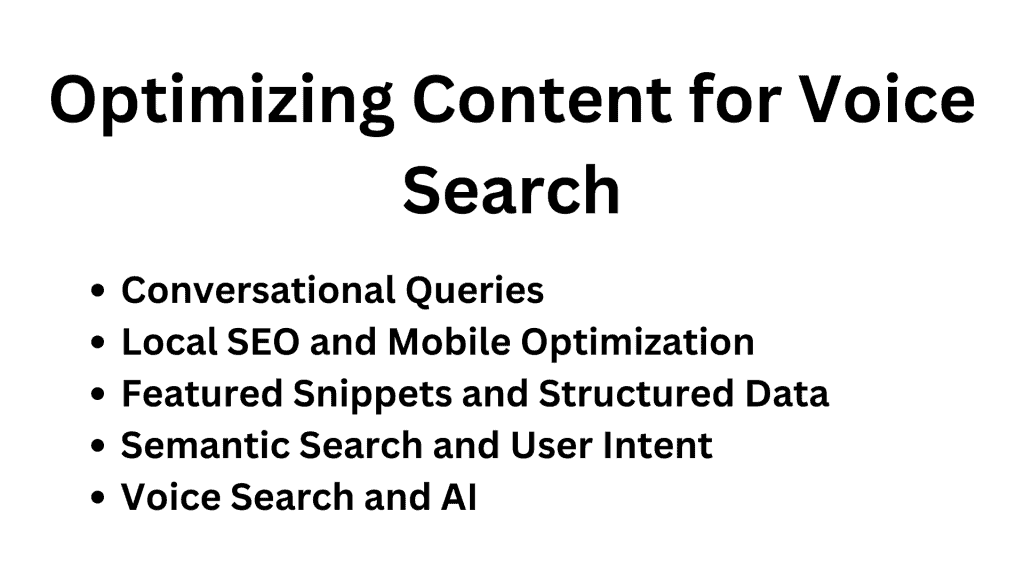
Optimizing Content for Voice Search
- Conversational Queries: Adapt content to match the conversational tone of voice searches. Implementing long-tail keywords and phrases that mimic natural speech patterns can enhance content relevance.
- Local SEO and Mobile Optimization: With a significant volume of voice searches being local, ensure your local SEO is robust. Also, as most voice searches are performed on mobile devices, mobile optimization is non-negotiable.
- Featured Snippets and Structured Data: Structuring content to qualify for featured snippets can vastly improve visibility in voice search results. The use of schema markup helps in organizing and presenting data effectively.
- Semantic Search and User Intent: Understand the context and the specific needs behind voice queries. Optimize content to address these intents directly and succinctly.
- Voice Search and AI: Keep abreast of how AI and machine learning are continuously evolving voice search algorithms. Tailor your strategies to align with these developments for better content optimization.
The Role of SEO in Voice Search
The integration of voice search into our daily lives has necessitated an evolution in SEO strategies. Voice search and content optimization are becoming increasingly important as technologies like Google Assistant, Siri, and Amazon Alexa become more sophisticated. This evolution underscores the importance of long-tail keywords, natural language, and structured data in enhancing visibility and improving user experience.
Evolution of SEO with Voice Search
SEO has transformed from a focus on short, often fragmented text queries to understanding and optimizing for longer, conversational phrases used in voice searches. This shift is largely due to the rise of Natural Language Processing (NLP) and Artificial Intelligence (AI) within search engines. These technologies enable a better understanding of the user’s intent and the context of queries, making conversational queries and semantic search fundamental to effective voice search SEO.
Importance of Long-Tail Keywords and Natural Language
In voice search, users tend to use more specific and naturally phrased language. This means that content optimized for voice search must include long-tail keywords that reflect how real people talk and ask questions. This not only improves the chances of matching with user queries but also aligns with the increasing sophistication of search engine algorithms in interpreting natural language. Integrating conversational search queries into your content strategy for voice search is crucial for capturing the essence of how users interact with voice-activated technology.
Structured Data and Its Impact on Voice Search Visibility
Structured data plays a pivotal role in voice search and content optimization. By organizing information and providing clear context about the content of a page, structured data helps search engines understand and categorize content more effectively. This is particularly important for voice search, where delivering quick and accurate answers is key. Websites that use structured data are more likely to generate Featured Snippets, which are often sourced for voice search responses.
Practical SEO Strategies for Voice Search Optimization
- Optimize for Featured Snippets: Targeting featured snippets can lead to your content being the first answer provided in voice search results. Provide clear, concise, and direct answers to commonly asked questions in your content.
- Focus on Local SEO and Mobile Optimization: As many voice searches are local and performed on mobile devices, ensure your site is mobile-friendly and your local listings are accurate and comprehensive.
- Understand and Implement Structured Data: Use schema markup to help search engines understand the context of your content, making it more likely to be featured in voice search results.
- Monitor Voice Search Trends and Algorithm Updates: Stay informed about the latest in voice search technology and how search engines are adapting. This will help you anticipate changes and adjust your strategies accordingly.
Content Optimization Strategies for Voice Search
Voice search and content optimization are rapidly changing the SEO landscape, making it essential to adapt content strategies accordingly. As voice search becomes more prevalent through tools like Google Assistant, Siri, and Amazon Alexa, understanding how to optimize content specifically for voice queries is crucial. Here are the best practices for creating voice search-friendly content, focusing on conversational tone, context, and the importance of local SEO.
Best Practices for Creating Voice Search-Friendly Content
1. Use Conversational Tone and Long-Tail Keywords:
Voice searches are typically more conversational than text searches. Incorporate a natural, conversational tone into your content, using long-tail keywords that mirror how people naturally speak. This aligns with the natural language processing capabilities of AI technologies and makes your content more likely to match with voice queries.
2. Structure Content with User Intent in Mind:
Understand the different types of queries users are likely to make via voice search. Typically, these include informational, navigational, and transactional queries. Structuring your content to directly answer these questions with concise, clear information can increase the chances of being picked up as a voice search result, particularly in featured snippets.
3. Optimize for Featured Snippets:
Voice search results often pull from featured snippets. Ensure your content provides concise, authoritative answers to frequently asked questions in your domain. Use structured data to help search engines understand and categorize your content effectively.
The Role of Conversational Tone and Context
1. Contextualize with Semantic Search:
Semantic search seeks to understand the query context and user intent. Optimize your content by ensuring it addresses the underlying questions users might have. This involves a deep understanding of your audience and how they use conversational queries for searching.
2. Tailor Content to The User’s Conversational Queries:
Voice search queries often come in the form of questions. Use a conversational tone to directly address these queries. Implementing a Q&A format or FAQs on your site can be an effective way to capture voice search traffic.
Importance of Local SEO for Voice Search
1. Optimize for Local Queries:
Many voice searches are local, such as looking for nearby services or directions. Ensure your business is listed accurately on local directories and Google My Business. Use location-based keywords and phrases in your content to increase visibility for these local voice searches.
2. Mobile Optimization:
As most voice searches are done on mobile devices, ensuring your website is mobile-friendly is crucial. A responsive design, fast loading times, and accessible content are key factors in providing a positive user experience and improving your site’s visibility in voice search results.
Technical Aspects of Voice Search Optimisation
In the realm of SEO, voice search and content optimization have become essential, particularly considering the technical aspects vital for success. With the proliferation of voice search through platforms like Google Assistant, Siri, and Amazon Alexa, websites must adapt to remain competitive.
Website Speed and Mobile Optimization
1. Fast Loading Times:
Voice search is predominantly used on mobile devices. Therefore, website speed is crucial. Fast loading times enhance user experience, which is a significant ranking factor for voice search SEO. Utilizing tools to minimize load time and optimize images can significantly impact your site’s performance.
2. Mobile-Friendly Design:
Since voice searches are frequently performed on mobile devices, having a mobile-optimized website is non-negotiable. This includes responsive design, easy navigation, and accessible content that aligns with mobile voice search trends.
Voice Search and Schema Markup
1. Implementing Structured Data:
Structured data, or schema markup, is vital for voice search optimization. It helps search engines understand the context of your content, making it more likely to be featured in voice search results, especially for queries that trigger featured snippets.
2. Enhancing Content Visibility:
By marking up content with schema, you provide clear signals to search engines about the nature of your content. This can range from local business information to event listings, which is particularly useful for local voice search and optimizing for voice search snippets.
Accessibility Considerations
1. Inclusive Content Strategy:
Voice search and content optimization must also consider accessibility. Ensure that your content is easily understandable and can be navigated via voice commands. This includes clear headings, alt text for images, and transcripts for audio and video content.
2. User Intent and Conversational Queries:
Understanding and optimizing for user intent is more crucial than ever. Content should be tailored to answer conversational queries and meet the specific needs of users engaging through voice search, which often involves natural language processing in SEO.
3. Voice Command Optimization:
Optimizing for voice commands involves understanding how different voice assistants process queries. This means not only focusing on keywords but also the context in which these keywords are used, aligning with the latest voice search algorithm updates.
Conclusion
As the digital landscape continually evolves, the importance of voice search and content optimization cannot be overstated. Key takeaways from the ongoing discourse about voice search SEO make it clear that adapting to these trends is not just beneficial but necessary for maintaining relevance and competitiveness.
- Conversational Tone and Long-Tail Keywords: Implementing a conversational tone and long-tail keywords in content strategies aligns with the natural language processing used in voice search technologies like Google Assistant, Siri, and Amazon Alexa.
- Technical SEO for Voice: Website speed, mobile optimization, and schema markup are essential technical aspects of voice search optimization. These elements help search engines understand and prioritize content, improving visibility in voice search results.
- Structured Data and Featured Snippets: Utilizing structured data can significantly improve the chances of appearing in voice search results, especially for featured snippets, which are commonly used to provide quick and accurate answers.
- Local SEO and User Intent: Optimizing for local SEO and understanding user intent are critical. Many voice searches are local or have specific intents, and tailoring content to these searches can drive significant traffic and engagement.
Voice search is not a passing trend but a fundamental shift in how users interact with search engines. As technology continues to advance, the precision and capabilities of voice search will only increase, making it even more integral to effective SEO strategies. Staying informed about the latest trends, algorithm updates, and user behaviours is crucial for ongoing optimization.
FAQs
What is voice search optimization?
Voice search optimization is the process of adjusting and creating content to improve visibility and ranking for voice-activated search queries. This involves understanding how people use voice commands to interact with devices, focusing on conversational keywords, and natural language, and providing direct, concise answers.
How does voice search impact SEO?
Voice search impacts SEO by changing how keywords are targeted, prioritizing conversational and long-tail queries, and emphasizing the need for quick, direct answers. It has shifted the focus towards optimizing natural speech patterns and improving the mobile-friendliness of websites.
What are the best strategies for optimizing for voice search?
The best strategies for optimizing for voice search include using long-tail keywords, focusing on conversational language, structuring content for featured snippets, enhancing local SEO, and ensuring websites are mobile-friendly with fast loading times.
How do I optimize my content for voice search?
Optimize content for voice search by using conversational language, incorporating long-tail keywords, structuring data for featured snippets, improving site speed and mobile responsiveness, and focusing on answering direct questions relevant to user intent.
What are the benefits of voice search for businesses?
The benefits of voice search for businesses include increased visibility in search results, improved user experience, higher engagement rates, enhanced accessibility, and the ability to tap into the growing number of users relying on voice-activated devices for information.
Can voice search improve user experience?
Yes, voice search can improve user experience by providing faster, more convenient, and more natural interactions with devices. It offers users a hands-free way to get information, making technology more accessible and efficient.
How is voice search changing the SEO landscape?
Voice search is changing the SEO landscape by prioritizing natural, conversational language, making mobile optimization crucial, and shifting focus towards understanding user intent. It’s also increasing the importance of local SEO and prompting more businesses to adopt a voice-first approach in their SEO strategies.
What role does natural language processing play in voice search?
Natural language processing (NLP) plays a critical role in voice search by allowing computers to understand and interpret human language, making it possible for voice assistants to comprehend and respond to voice queries accurately and efficiently.
Are there any tools to help with voice search optimization?
Yes, there are tools to help with voice search optimization, including keyword research tools tailored for voice search, platforms for testing site speed and mobile-friendliness, and analytics to understand voice search trends and user behavior.
How do I measure the success of voice search optimization?
Measure the success of voice search optimization by tracking increases in traffic from voice searches, improvements in ranking for conversational keywords, higher engagement rates, and enhanced visibility in featured snippets and local search results.